 Image 1 of 1
'Literary Worlds': Annotated Personal Reflective Discursive Exemplar
$30.00
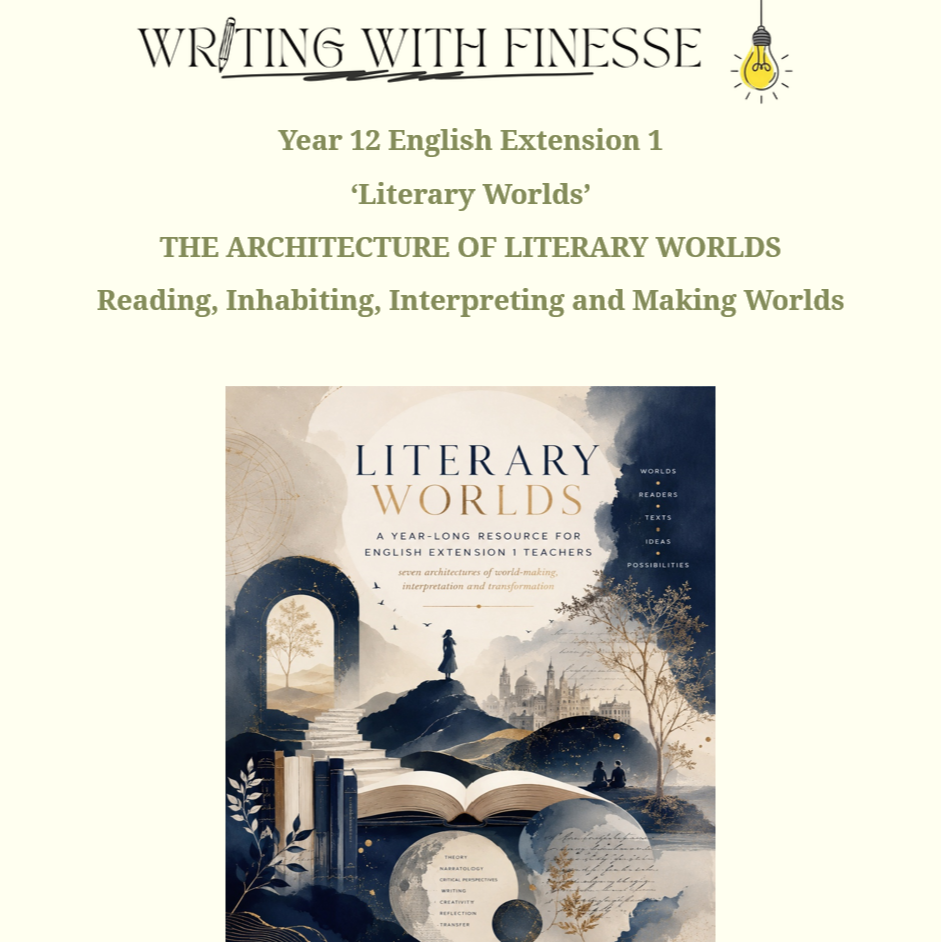
Literary Worlds can feel conceptually rich, but sometimes nebulous and difficult to translate into knowing what students need to learn and what writing styles they need to master.
This Writing with Finesse Annotated Exemplar has been created as a teacher-ready resource to help demystify what a sophisticated personal, reflective and discursive Literary Worlds response can look like and most importantly how it can be explicitly taught.
Using the practice response 'Knowing the New', the resource models how students can:
- shape a literary, reflective voice that feels natural and informed
- engage meaningfully with the conceptual demands of Literary Worlds
- integrate literary references with purpose and fluency
- use a motif that develops and accumulates meaning
- move between personal reflection, literary insight and interpretation
- sustain a meandering yet purposeful line of thought
The annotations sit alongside the relevant sections of the response and unpack each movement through four recurring lenses:
QUESTION: How the response develops the demands of the question
LITERARY WORLDS: How it explores world-making, readers, writers, context, value and interpretation
FORM & VOICE: How the reflective-discursive style is crafted
MOTIF: How the old/new tension evolves across the piece
The resource also maps the conceptual progression beneath the writing, helping students see how a meandering literary response remains carefully crafted and controlled.
This resource is classroom ready and will provide opportunities for rich literary discussions, while modelling the innovative possibilities of Literary Worlds writing with students.
Literary Worlds can feel conceptually rich, but sometimes nebulous and difficult to translate into knowing what students need to learn and what writing styles they need to master.
This Writing with Finesse Annotated Exemplar has been created as a teacher-ready resource to help demystify what a sophisticated personal, reflective and discursive Literary Worlds response can look like and most importantly how it can be explicitly taught.
Using the practice response 'Knowing the New', the resource models how students can:
- shape a literary, reflective voice that feels natural and informed
- engage meaningfully with the conceptual demands of Literary Worlds
- integrate literary references with purpose and fluency
- use a motif that develops and accumulates meaning
- move between personal reflection, literary insight and interpretation
- sustain a meandering yet purposeful line of thought
The annotations sit alongside the relevant sections of the response and unpack each movement through four recurring lenses:
QUESTION: How the response develops the demands of the question
LITERARY WORLDS: How it explores world-making, readers, writers, context, value and interpretation
FORM & VOICE: How the reflective-discursive style is crafted
MOTIF: How the old/new tension evolves across the piece
The resource also maps the conceptual progression beneath the writing, helping students see how a meandering literary response remains carefully crafted and controlled.
This resource is classroom ready and will provide opportunities for rich literary discussions, while modelling the innovative possibilities of Literary Worlds writing with students.