 Image 1 of 1
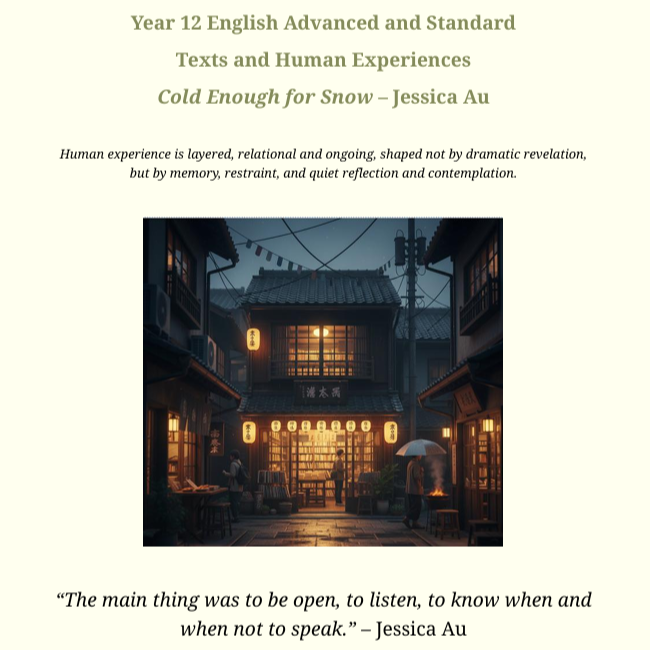
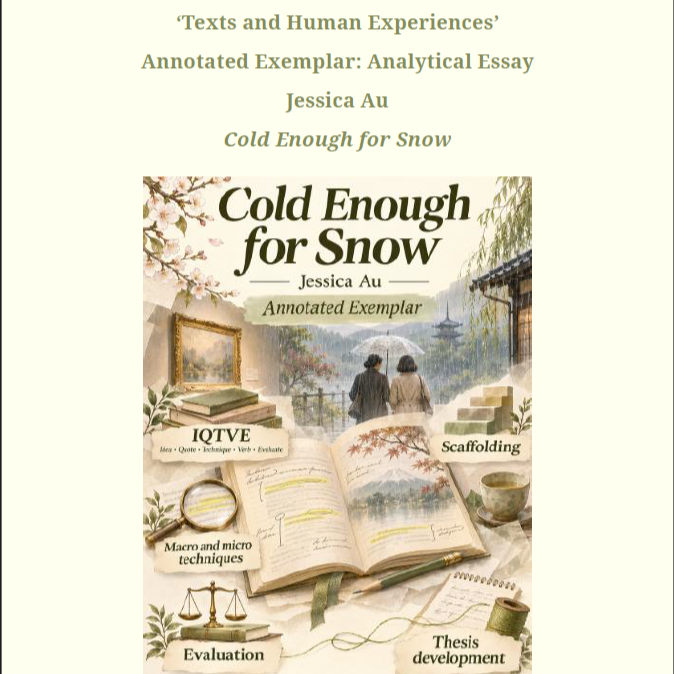
Annotated Exemplar: Texts and Human Experiences Cold Enough for Snow
$30.00
Sophisticated analytical writing begins with careful noticing. In Jessica Au’s Cold Enough for Snow, restrained narration, layered memories and ordinary gestures carry profound questions about intimacy, identity and understanding. Students need to see how those quiet details become the foundations of a sustained conceptual argument.
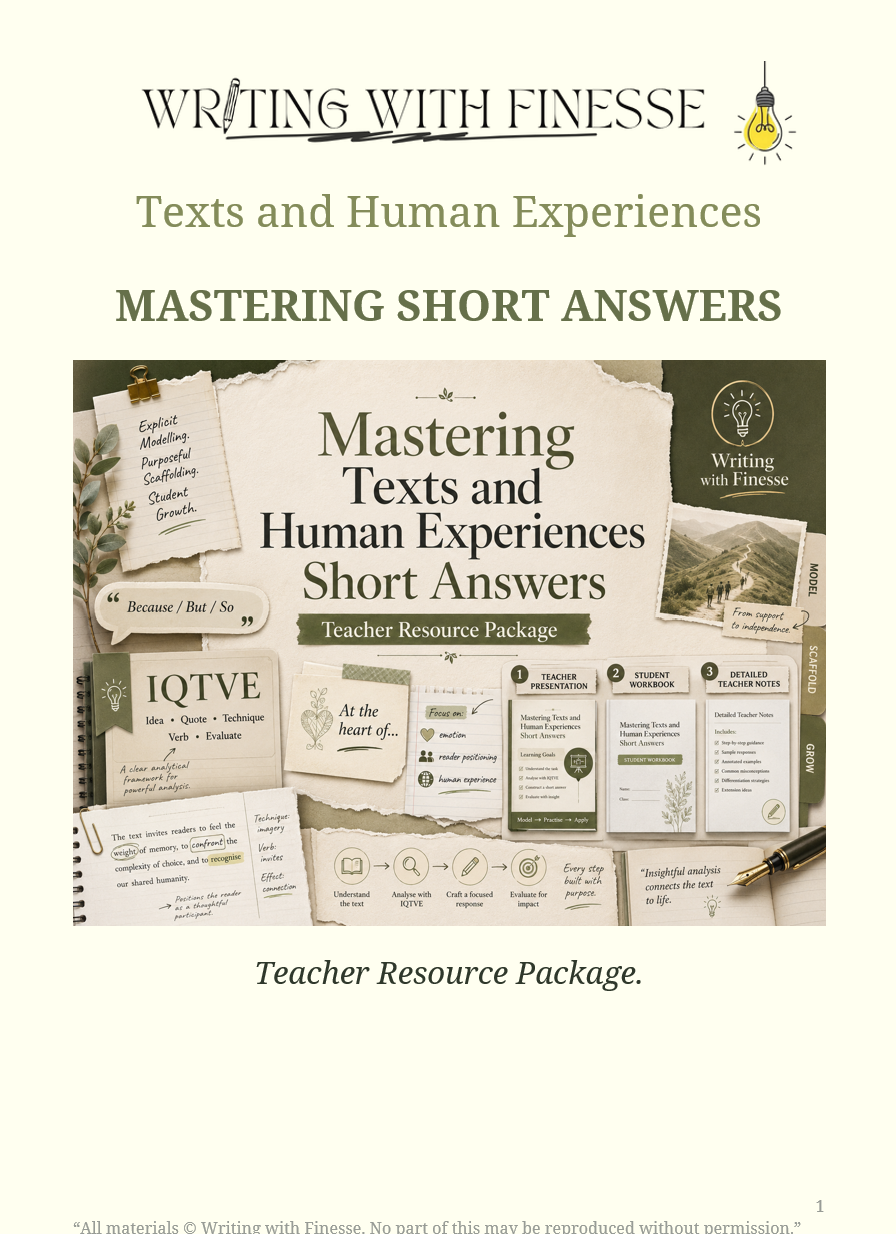
This Writing with Finesse annotated Band 6 exemplar offers a high-level model response shaped specifically through Texts and Human Experiences. Exploring intergenerational relationships, art, memory and the limits of perception, it examines how Au invites readers to reconsider what it means to understand ourselves and others and how connection can deepen without uncertainty being resolved.
The resource deconstructs the writing sentence by sentence, making the relationship between technical analysis, conceptual evaluation and thesis development visible. Detailed annotations show teachers and students how to:
respond precisely to the question
establish conceptual tension through Because–But–So
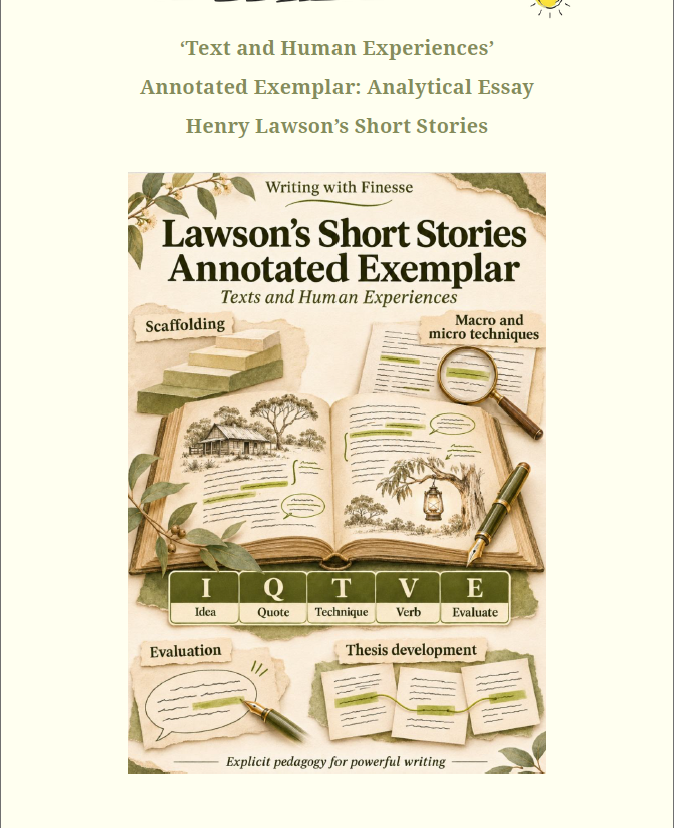
develop IQTVE flexibly across connected sentences
integrate discerning evidence with precise technical analysis
connect macro narrative choices with micro language features
explain the significance of restricted perspective, memory and recurring motifs
extend evaluation through further VE sentences
use sentence construction to qualify, connect and develop ideas
sustain a thesis that becomes more nuanced across the response.
A particular strength is its explicit attention to conceptual progression. The annotations trace how the argument develops from the limits of knowing another person, through the reconsideration of interpretive habits, towards the ethical significance of patient attention and ordinary care. Students can see what each sentence contributes, why the next idea follows and how the thesis develops.
At Writing with Finesse, we believe that thinking is writing. Making that thinking visible helps students understand how to develop, complicate and substantiate their own interpretations.
For teachers introducing Au’s novella and students developing their analytical confidence, this resource brings close reading, conceptual thinking and purposeful composition into a clear, teachable relationship.